Posted May 8, 2019 by Sheraz Ali in Microsoft Word
Even Word experts need a reminder of the basics. Sometimes you know how to delete pages in word but it slips past your mind. Instead of wracking your memory, why not just look it up?
Microsoft office’s standard tutorials are good and all, but they’re not reliable and don’t cover all the bases.
In my experience, there’s always a speedier way of getting things done.
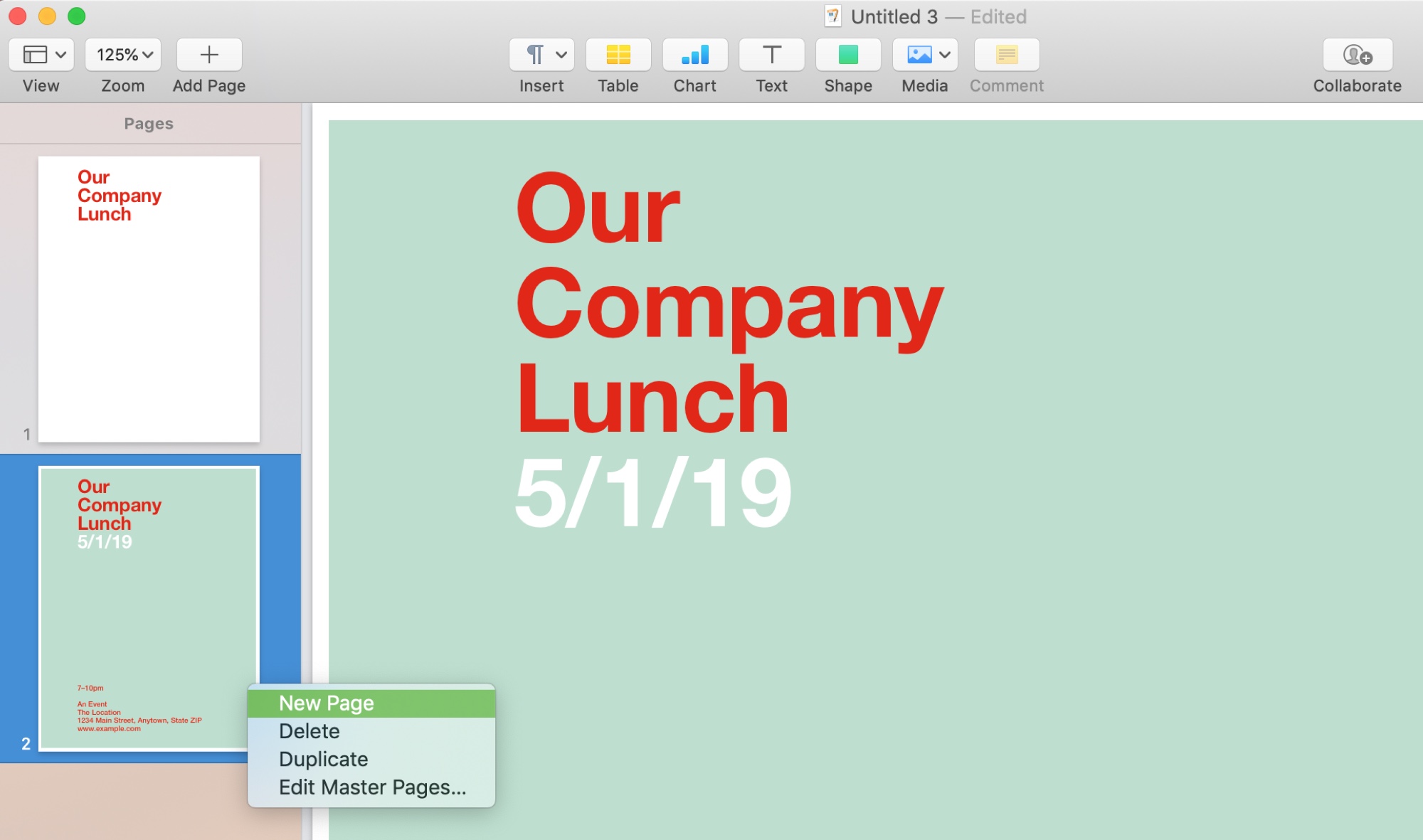
The most basic solution: go to your unwanted blank page, click as close to the bottom of the page as you can get, and press your backspace key until the page is removed. Go to the VIEW tab, select Navigation Pane in the Show section, select the blank page thumbnail in the left panel, and press your delete key until it is removed. 2020-4-3 How to Delete an unwanted Page in Microsoft Word. Let’s see how to delete a page in the middle of the document. If you are not a big fan of formatting in your word document then you could manually select the content of that page and hit delete in order to get rid of that page.
In this tutorial, I’ll outline some of the fastest methods to get rid of unwanted or blank pages in word. Not only will this help you brush up on your basics of MS Word, but also learn new things to increase your productivity.
Rest assured, this tutorial applies to all the latest version of Microsoft Word. Whether you’re using Microsoft Word 2003 or MS Word 2019, the process will remain the same.
How to Delete Pages in Word: The Methods
The Backspace Key ( To remove the last unwanted page)
The backspace key is the easiest way of removing excess pages from your word document. Using it, however, to get your desired result is a bit tricky.
Here’s how it works…
1. Open the MS word document.
2. Press Ctrl+ End to go to the last page of your document.
3. Press and hold the backspace button for a couple of seconds until the final page is removed.
Note: If your keyboard doesn’t have a backspace button, Use the Delete button. It serves the same function.
Navigation Pane ( To delete headings and Sections)
This method is great if you want to remove headings and sections and their underlying text.
For example, if you’re working on an essay, and decide that the heading on page no.3 is superfluous, you can delete it with this method.
Here’s how…
1. Open the MS word document.
2. Go to the View Tab (at the top).
3. Check Navigation Pane.
4. A sidebar, listing all your headings will appear before you. In my case, I only have the one heading. Right-click the heading and select delete from the drop-down menu.
Spot Page Breaks to Eliminate Extra Pages
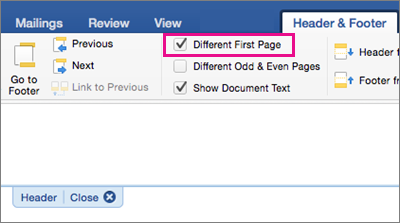
Sometimes, pages refuse to get deleted because they have a page break somewhere in them. You can easily spot these page breaks with this simple tip.
Go to the layout tab in your MS word document and locate the breaks option. Click it to check whether you have page breaks somewhere hidden.
Check the Layout ( To spot inconsistencies in your text)
Sometimes, the major reason you’re unable to delete a page in Word is because of a problem in the layout. To make sure this isn’t the case, follow these steps.
1. Go to the Page Layout (older versions) or Layout tab (Newer Versions).
2. Select Margins> Custom Margins.
3. Select the layout tab in the popup window.
4. Make sure the sections start from a new page.
With these methods, I’m sure you’ve learned how to delete pages in word in each and every way. For further guidance, check out this tutorial video.
And if this doesn’t help either, you can check out the FAQ or leave a comment.
Frequently Asked Questions
How do I edit PDf Files in Microsoft word?
Follow the hyperlink to get the answer to this question.
Mac Microsoft Word Delete Page Break
How to delete pages in word using older version like MS word 2003?
As I’ve mentioned in the beginning, aside from some changes, the methods will remain identical.
About Sheraz Ali
View more articles by Sheraz Ali
The Conversation
Follow the reactions below and share your own thoughts.
Dealing with blank pages can be tricky for newcomers to Microsoft Word. Many people familiar with the word processing software take some of its more obvious features for granted. If they were asked how to delete a page in Word 2010, they’d probably say, “It’s easy, just delete it!”
For a newbie, it isn’t exactly that easy, and if you want to get technical, it isn’t even correct. No page in Microsoft Word is actually blank; if it was, you wouldn’t be able to see it.
In this guide, we’ll assume a limited knowledge of Microsoft Word, and teach you exactly how to delete a page in Word 2010, from start to finish. Are you a beginner looking for a little extra guidance? Check out this Word 2010 Beginner’s course to get started!
How to Delete a Page
Let’s say after a long day of revising a draft, copying, pasting, and rearranging information, you end up with a few pages in your document worth scrapping. But how do you delete a page in the middle of your document?
Highlight and Delete
If you don’t have any fancy formatting in your document, you could manually highlight the contents of that page and use either the Backspace button or Delete button to erase the text on the page you want to get rid of.
You can also do this by highlighting the text you want to delete, right clicking on the highlighted portion, and selecting Cut from the context menu that appears.
Go To and Delete
If highlighting the text on a specific page is difficult for you – for instance, if you’re using a track pad or are just having trouble clicking and dragging to highlight the right content – you can easily select the contents of a single page by using the Go To function.
Start by clicking anywhere on the page you want to delete, then find the Go To function by navigating to the upper right of the screen. You should see a small pair of binoculars with the word Find next to it.
Click on the small, down-pointing arrow to open up a drop-down menu. Don’t click Find, because this will only trigger the Find function. When the drop-down menu is open, click on the last option in the list: Go To. You can also press Ctrl+G.
The following prompt will appear:
In the Go To tab, where it says “Enter page number,” type in page into the text field, taking care to use a backslash “” and not a forward-facing slash “/” otherwise it won’t work.
Click the Go To button, and the page you initially placed your cursor in should be highlighted completely.
Now, you can delete the highlighted text using the methods described before – Backspace, Delete, or right-click and Cut.
Go To and Delete For Multiple Pages
Sometimes, you might be stuck with multiple pages you want to get rid of, all in the middle of your document. Since clicking and dragging through a large document, trying to highlight multiple page’s worth of text can be a hassle, we can use the Go To function explained above to do it for us.
In our example document, we want to get rid of pages 3-7.
Hit F5 hotkey to bring up the Go To function. It doesn’t matter what page you have selected already when you bring it up this time, but you do need to know which pages you want to delete.
Still having trouble finding Go To? Learn your way around Word 2010 here!
When it asks you to enter a page number, enter the first page that you want deleted. In our example, that’s page 3, so we enter 3 in the text field.
Then press Enter.
Ms Word Mac Delete Page
You should see page 3 has been selected. Next, press the F8 hotkey. This is used to extend a selection, which you’ll understand after this next step.
Press F5 again to bring up the Go To function. You might think you need to enter 7 into the text field to select that page, but because the Go To function selects up to the very beginning of a page, it won’t actually fully select the page you enter next.
So we want to enter page 8 instead, and press Enter.
You’ll see pages 3-7 have been highlighted, and are ready for deletion!
Deleting Paragraph Markers
Let’s say you have a 9 page document that’s actually 10 pages because of a pesky blank page hanging out at the end. You could use the same methods to get rid of it listed above, or you could learn how to activate paragraph markers!
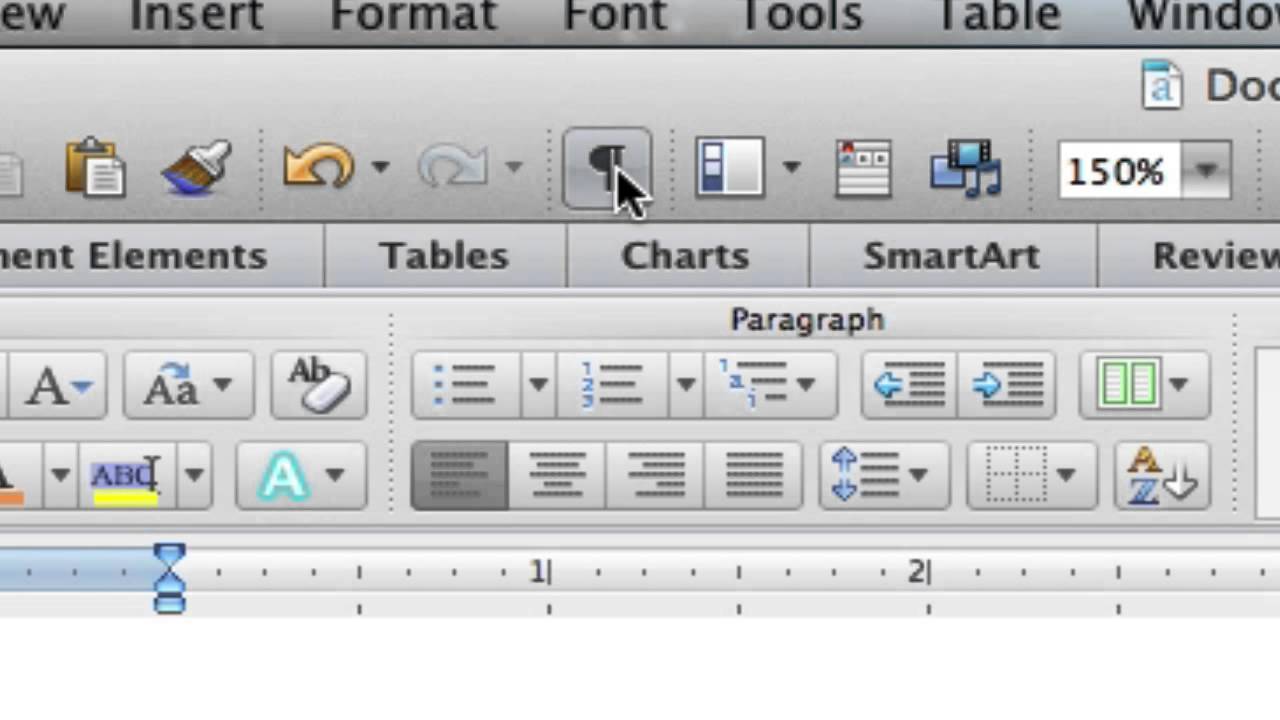
In the Home tab at the top of the screen, in the Paragraph section, you’ll see an icon for a paragraph marker. Click on it, or press Ctrl+Shift+8, or Ctrl+* to activate it.
You’ll notice a bunch of weird symbols have appeared in your document. These are formatting markers. They’re typically invisible, for obvious reasons: they clutter up your page and make it really inconvenient to write.
Don’t worry, you can turn them back off again, but for now we need them to figure out what’s going on with that “blank” page. As you can see on the left, our “blank” page isn’t actually blank at all. It’s full of paragraph markers, meaning there’s a lot of line breaks creating empty space in that page… five blank paragraphs, to be exact.
Line breaks occur when you press Enter in a Word document to skip to a new line and continue writing. Microsoft Word counts these lines as content, even if you can’t normally see them. That’s what the formatting markers are for. All you need to do here is highlight the paragraph markers the same way we learned to highlight any kind of text, and delete it. This will get rid of the empty paragraphs causing that “blank” page to stick around!
How To Delete Page In Word 2010
If you’re new to Microsoft Word, and found a lot of this went over your head, consider taking some entry-level courses!
View some comprehensive MS Word 2010 tutorials here, or consider a bundled course with PowerPoint, another valuable program.